India’s Consumer Credit Market: Key Trends to Watch in 2026
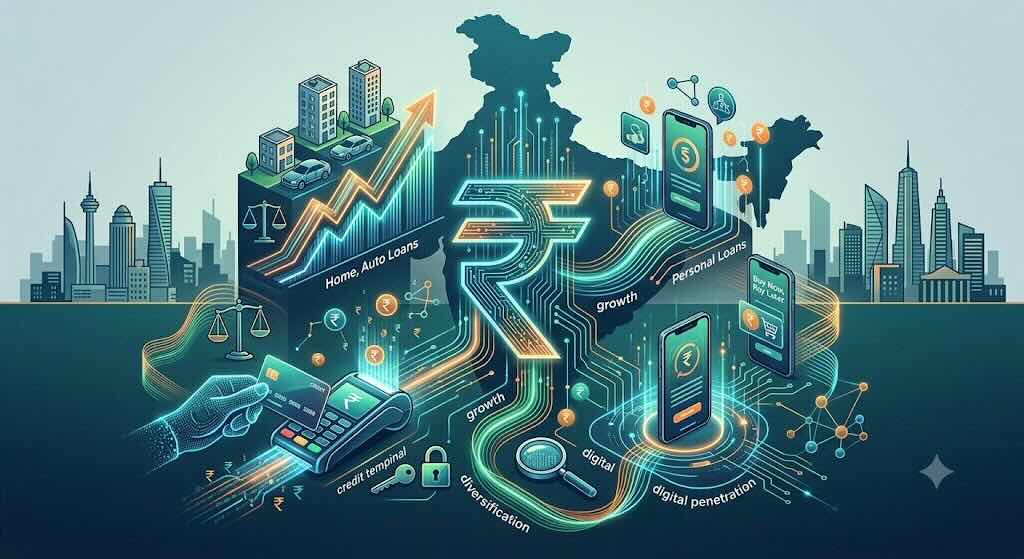
India’s consumer credit market is evolving quite fast in 2026. Borrowing is no longer limited to traditional products like home loans, vehicle loans, and education loans. Personal loans, credit cards, gold loans, and consumer durable financing are becoming a part of household borrowing.
At the same time, younger consumers are entering the formal credit system. Moreover, digital lending is also making credit more accessible. These changes will shape the consumer credit landscape in the years ahead.
1) Retail Credit Growth is Picking Up
Retail credit is a key driver of India’s financial system. Loan demand has increased a lot among several consumer credit categories due to household consumption, rising formalization and wider access to financial services.
Retail credit origination value has increased 20% year-on-year in the quarter ended in June 2026, whereas personal loan origination value grew by 34% during the same period. Smaller-ticket personal loanshave also contributed to the increase in origination volumes.
This indicates that consumer borrowing is going to expand in the near future.
2) Young Borrowers Are Becoming More Important
Young consumers have become an important part of India’s formal credit market. Personal loans, durable loans and credit cards are some of the popular products which are widely used by young first-time borrowers to establish credit history.
Consumers below 35 years have a significant share in new-to-credit borrowers, whereas young consumers outside metropolitan areas are also becoming increasingly active in the credit card market.
This indicates that there is huge opportunity for lenders to reach the new generation of customers. However, young borrowers with limited credit history will require a careful assessment of income, repayment capacity and existing debt.
3) Gold Loans Demand is Increasing
Gold loans are seeing huge growth in recent years and have become an important part of India’s retail market.
Outstanding gold loan balances have increased 3.8 times between March 2022 and December 2025. Their share in India’s retail credit portfolio has increased from 5.9% to 11.1 % by December 2025. This has made gold loans the second-largest retail credit product by outstanding balance after housing loans.
The average gold loan ticket size has increased from ₹90,000 in March 2022 to ₹1.96 lakh by December 2025. Moreover, women have accounted for 39% of gold originations by volume, which indicates that the product is reaching a wider audience.
4) Credit is Expanding Beyond Major Cities
Consumer credit is now even reaching people staying outside metropolitan cities. Semi-urban and rural consumers have become active participants in the formal credit ecosystem as financial access and digital distribution have improved a lot.
Many states of India that had a very small share in the formal credit system have now recorded strong growth in credit activity. This expansion is mainly due to an increase in financial awareness, digital access and the wider availability of formal lending channels.
For lenders, this creates an opportunity to expand beyond established urban markets. For consumers, it can improve access to regulated sources of credit closer to where they live.
5) Digital Lending Will Continue to Reshape Borrowing
Digital lending has totally changed how consumers access credit. Borrowers are now discovering more loan products through digital platforms. They submit applications, complete verification and get funds disbursed through digital platforms.
This faster access has made transparency more important. The RBI digital lending framework now requires regulated entities to disclose the Annual Percentage Rate (APR), which reflects the overall cost of borrowing, along with other important loan and borrower disclosures. The framework also contains requirements related to data collection, borrower consent and lending service providers.
As digital borrowing becomes more common, consumers will need to compare the total cost of credit rather than choosing the loan solely because the application process is quite convenient.
6) Credit Cards & Consumption Loans are Gaining Popularity
The usage of credit is also becoming increasingly linked to consumption. Personal loans, credit cards and consumer durable loans are becoming more important alongside the traditional borrowing categories.
The share of credit-active consumers who use consumption-oriented credit products has increased a lot in the past decade. Younger consumers and borrowers outside metropolitan cities are contributing to this expansion.
7) Responsible Lending & Credit Quality Will Remain Important
The expansion of consumer credit has brought greater focus on credit quality. Lenders now have to assess not only an individual loan application but also a borrower’s existing obligations across different credit products.
Recent analysis has also highlighted factors like recent delinquencies, unsecured exposure, multiple borrowing relationships and higher borrower-level exposure among borrowers. Lenders will need to monitor this closely.
The borrowers need to carefully assess their obligations and income before taking any additional loans. Easier availability of loans doesn’t mean that additional borrowing is affordable.
Conclusion
India’s consumer credit market is becoming larger, more digital and geographically broader in 2026. Personal loans are expanding, gold loans have become a major retail-credit category, younger consumers are entering the credit ecosystem, and more Indians are actively monitoring their credit scores.
The next phase of growth will depend not only on increasing access to credit but also on maintaining responsible borrowing and lending practices. For consumers, understanding the total cost of a loan, maintaining timely repayments, monitoring credit reports and considering existing debt obligations will remain important as India’s consumer credit market continue to evolve.